Distributed spatial intelligence
2026 · Adaptive kinetic environment / spatial multi-agent system
0.5m x 0.5m x 0.2m · 25 units · servo motors · python · TouchDesigner
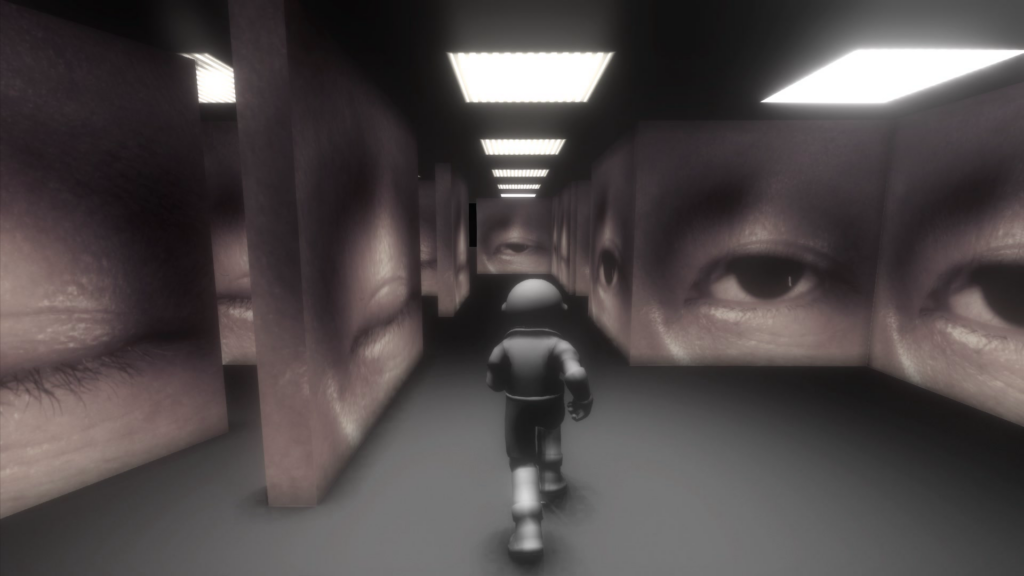
What if an environment is not just a container of life, but a life themselves? Nervous Maze, a.k.a. Moving Maze 2.0, is composed of many locally sensing, mutually tracing and remembering modules; not one wall knows about the entire maze, but they collectively form an environment that responds to you. While the navigator walks towards the exit, each unit senses the player’s proximity, its neighbors’ movement, and traces of prior movement through a myopic knowledge. While each unit shares a single Reinforcement Learning policy, because their positions and memories are different, they behave differently. Playing against this maze is like playing the game of Go, but against a sentient board. I’m interested in investigating how an environment would behave if it’s a continuous substrate of actionable units?
My early work Moving Maze already deconstructs maze from a static puzzle to a spatial system that acts against its player; now Nervous Maze shifts this agency from a central logic toward basal cognition, distributed across locally sensing and deciding units.
Retrospectively named Polytropos, this lineage of creations discusses distributed spatial agency, but each time with a different incremental proposition. Each work in Polytropos will inherit certain structures and topologies from its immediate predecessor, but shift its core mechanism and stack to establish its distinct proposition. Nervous Maze inherits Moving Maze‘s n × n board topology and maze game mechanic, but individual units act through a shared but distributed RL policy, making the whole game more unpredictable and expansive. A further increment is that the unit topology is changed after a dedicated study of maze topologies.
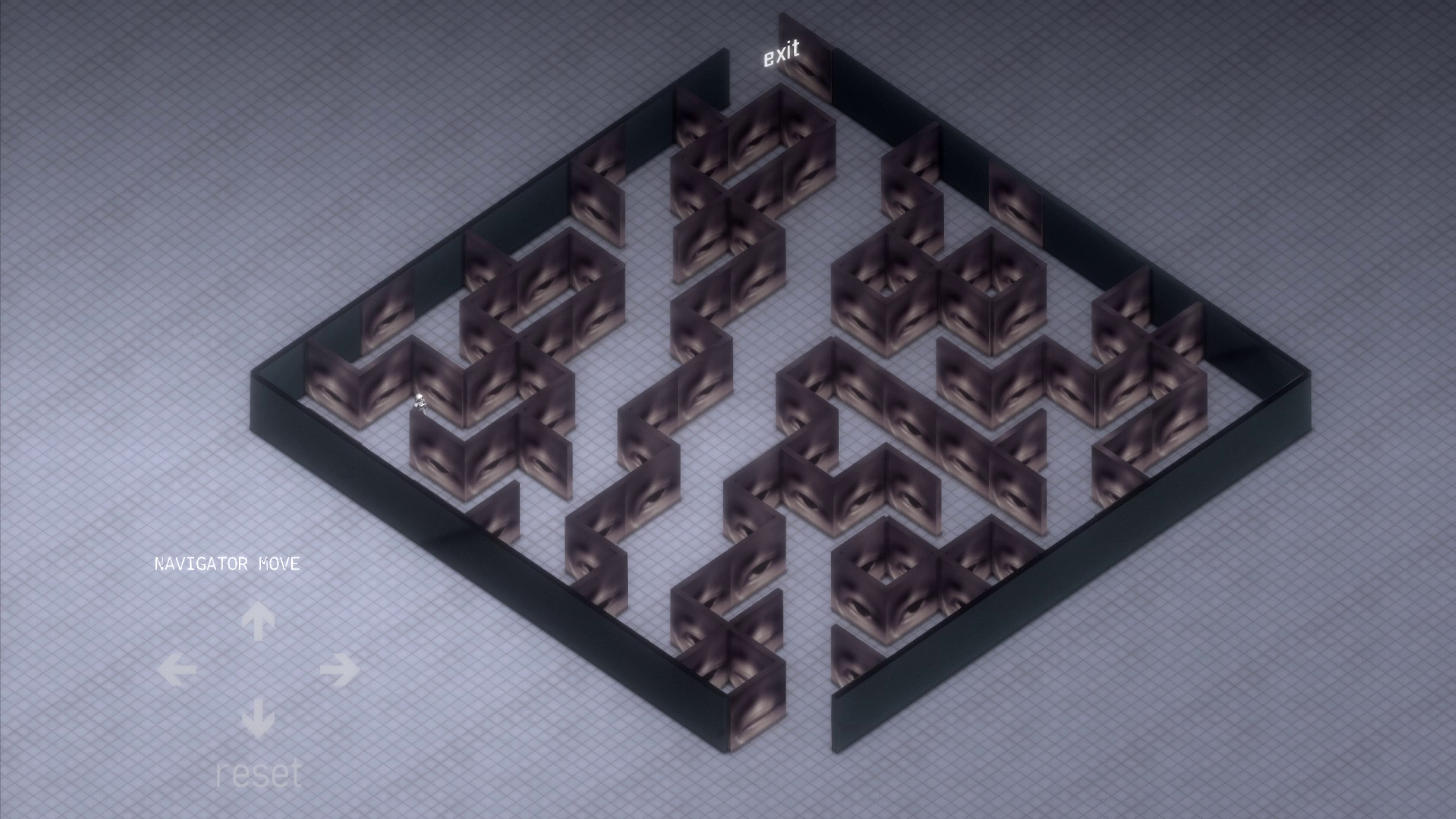
Overview of the maze
Tabletop kinetic apparatus